BLAST PROTECTION & PHYSICAL SECURITY
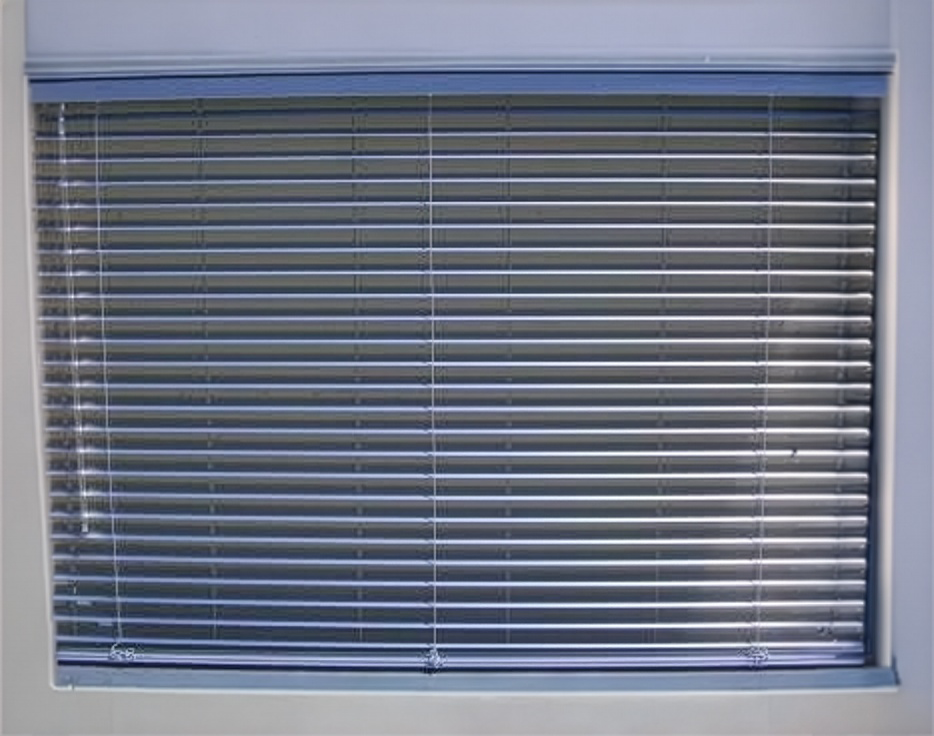
GlassLock's BlastBlind is an innovative window-blind-based catcher system engineered to mitigate glass hazards during explosive events—all while preserving the existing appearance of a building. Designed as an unobtrusive retrofit solution, BlastBlind captures and contains broken glazing before it can enter occupied spaces, offering an added layer of protection for occupants without requiring major architectural modifications or visible structural reinforcements.
GlassLock's BlastBlind provides a comprehensive range of retrofit solutions for buildings with architectural or historical significance. Finite Element models of BlastBlind can be tailored to match the geometry and construction of typical windows within a facility. BlastBlind catcher systems are designed for retrofit or renovation projects on existing buildings that may have a variety of window blind styles or treatments and wish to preserve their architectural sight lines while still achieving significant blast hazard mitigation. BlastBlind can also be fabricated to resemble any standard window blind product—or even a vintage Venetian style—to maintain historical authenticity where required.
BlastBlind was analyzed using LS-DYNA, a non-linear Finite Element Analysis (FEA) program developed by the Livermore Software Technology Corporation.
According to the ISC Design Criteria, exterior façade window systems should be designed to mitigate the hazardous effects of flying glazing following an explosive event. In a conventional system, the walls, anchorage, and window framing are expected to fully develop the capacity of the selected glazing material. However, BlastBlind functions as a catcher system rather than attempting to retain the glass within the frame. As a result, the intent of the Criteria can be satisfied by ensuring that BlastBlind can effectively catch the glass at the design load and transfer the resulting reactions into the structure without failure of key system components.
ENGINEERED, TESTED, VERIFIED
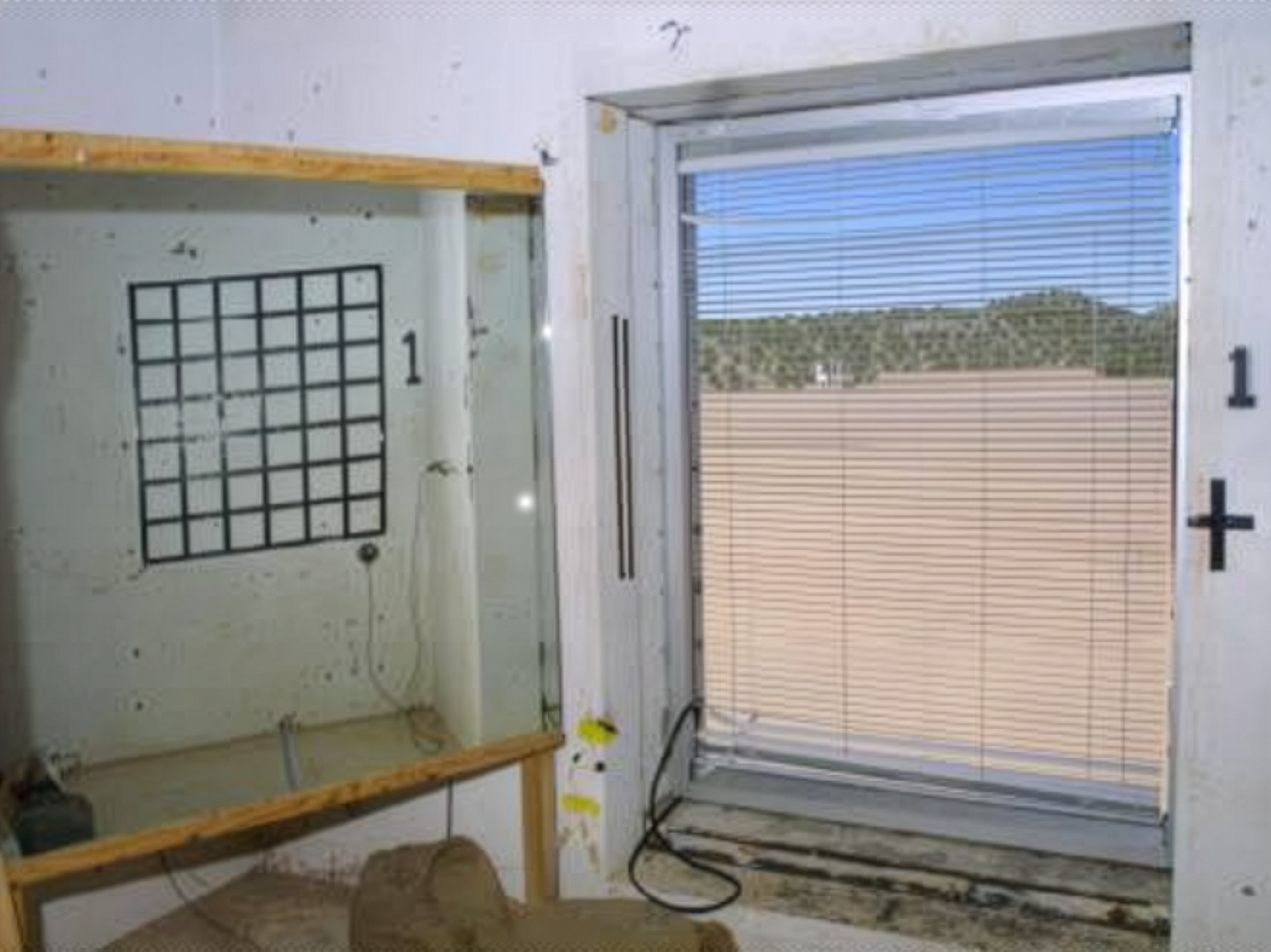
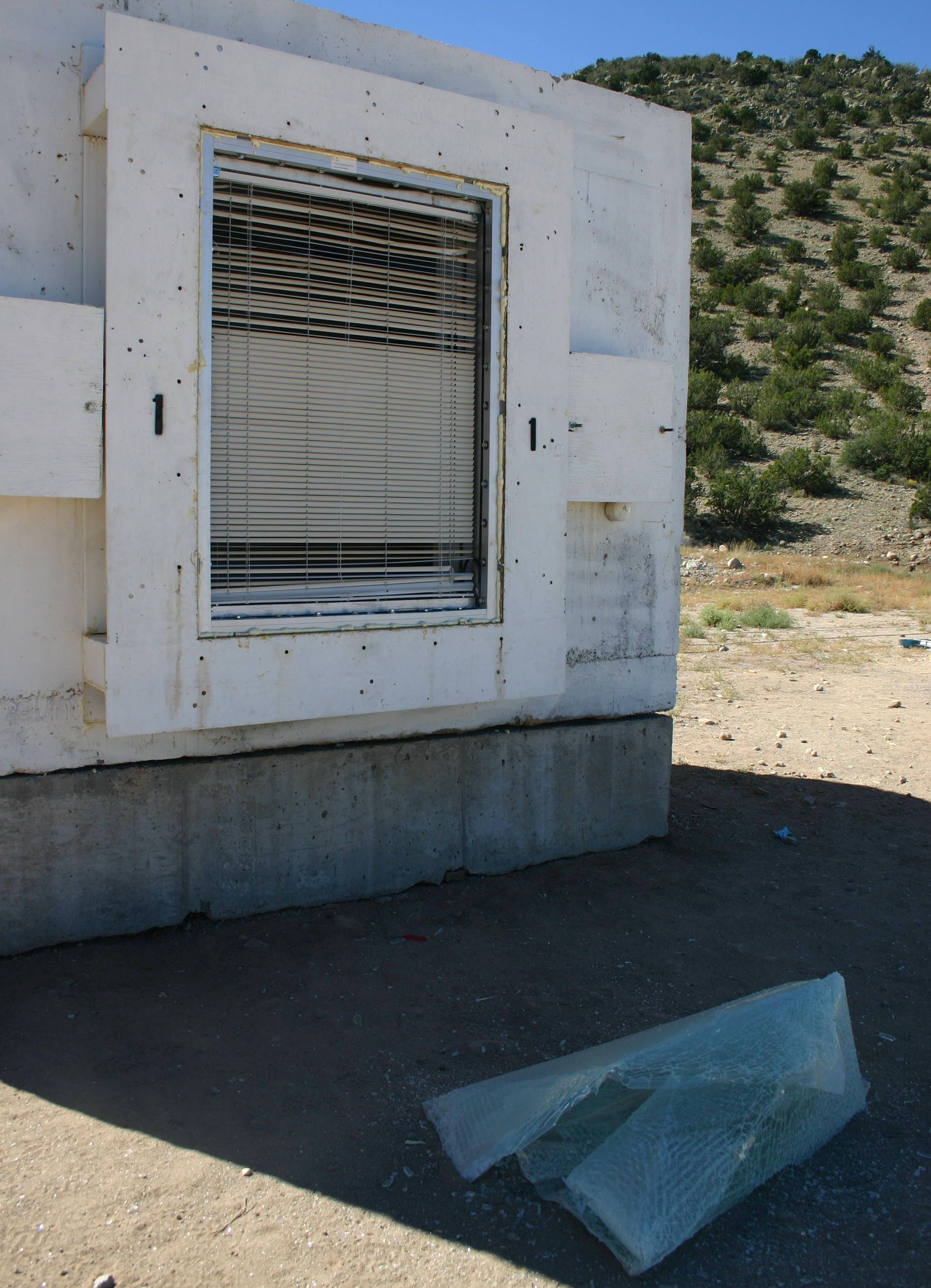
BlastBlind has undergone extensive third-party testing to confirm its performance in real-world blast conditions. An independent blast engineering firm conducted two full-scale live explosive tests—one in September 2004 and another in May 2005—subjecting the system and glazing to peak pressures of 4.8 psi.
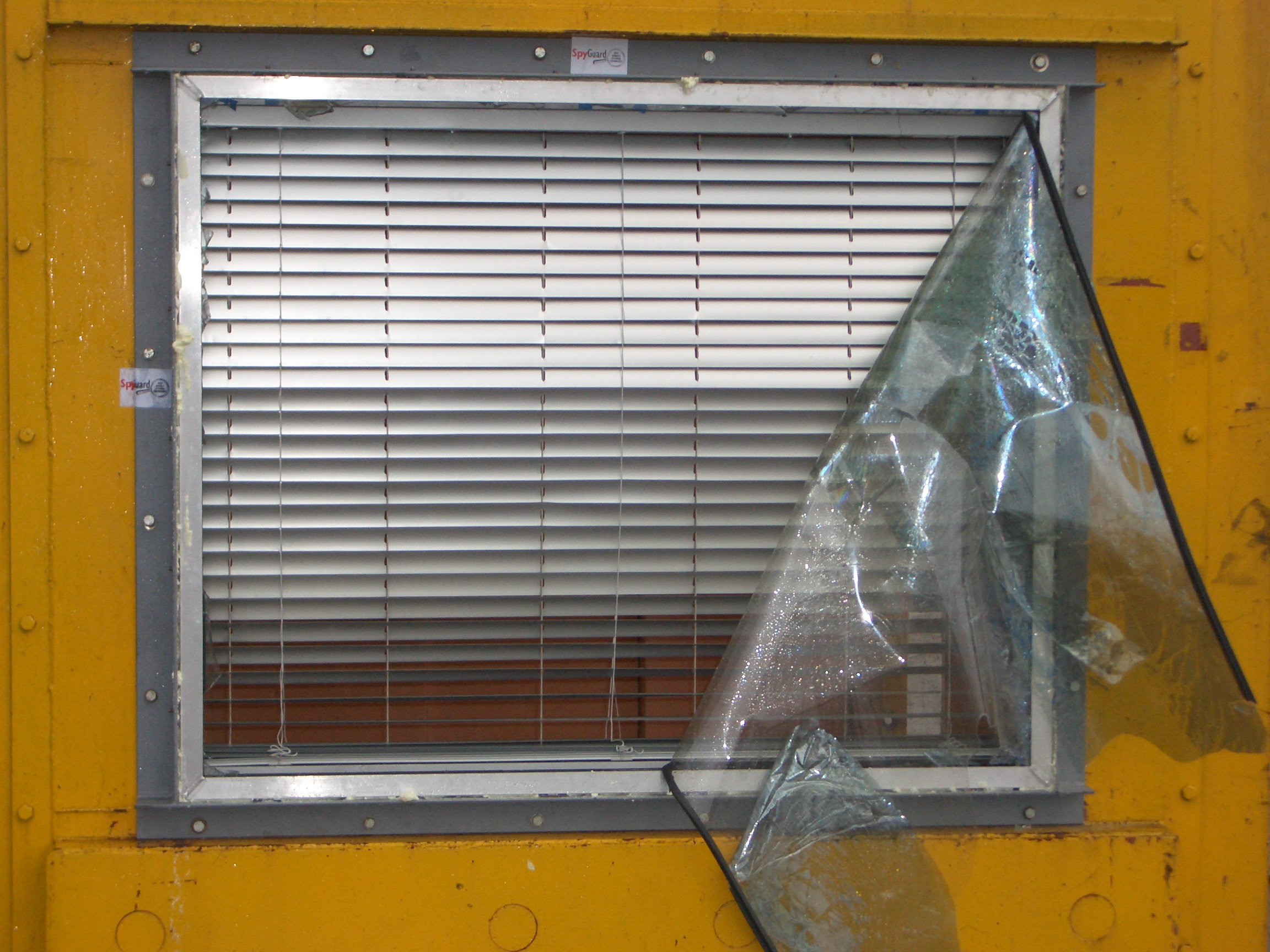
These tests were performed using standard ¼-inch commercial annealed glass treated with 7-mil Fragment Retention Film, providing a representative scenario for typical commercial window configurations. During both tests, virtually all film and glass fragments remained outside the protected structure, demonstrating the system's effectiveness as a catcher mechanism.
BlastBlind delivered a significant reduction in hazardous debris and achieved a GSA 3b Performance Level, indicating that the system successfully prevented dangerous glass fragments from entering the occupied space. In fact, across both tests, only a single small shard entered the reaction structure, further validating the system's ability to mitigate one of the most common and injurious hazards associated with explosive events.
SEPTEMBER 2004 BLAST TESTS
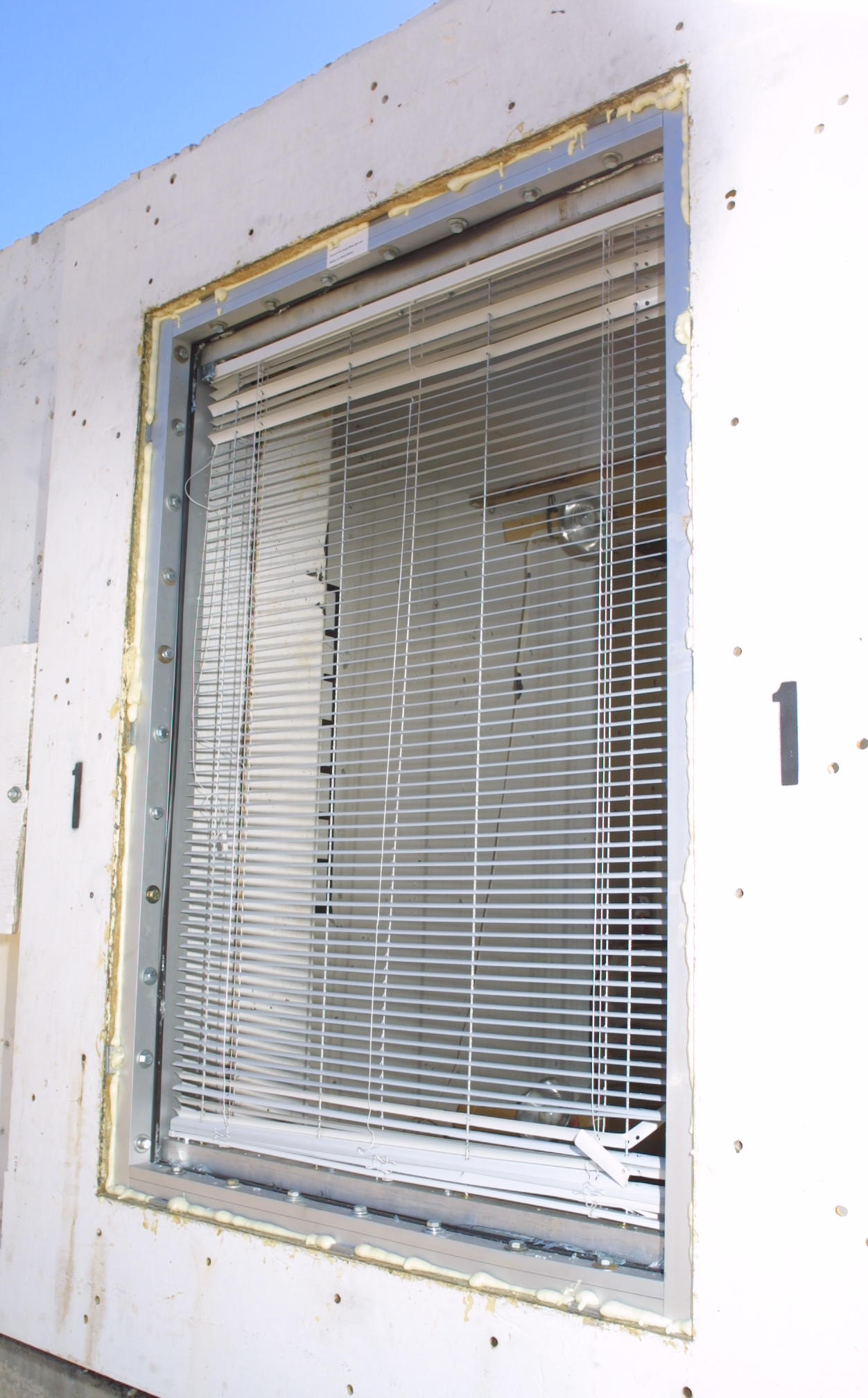
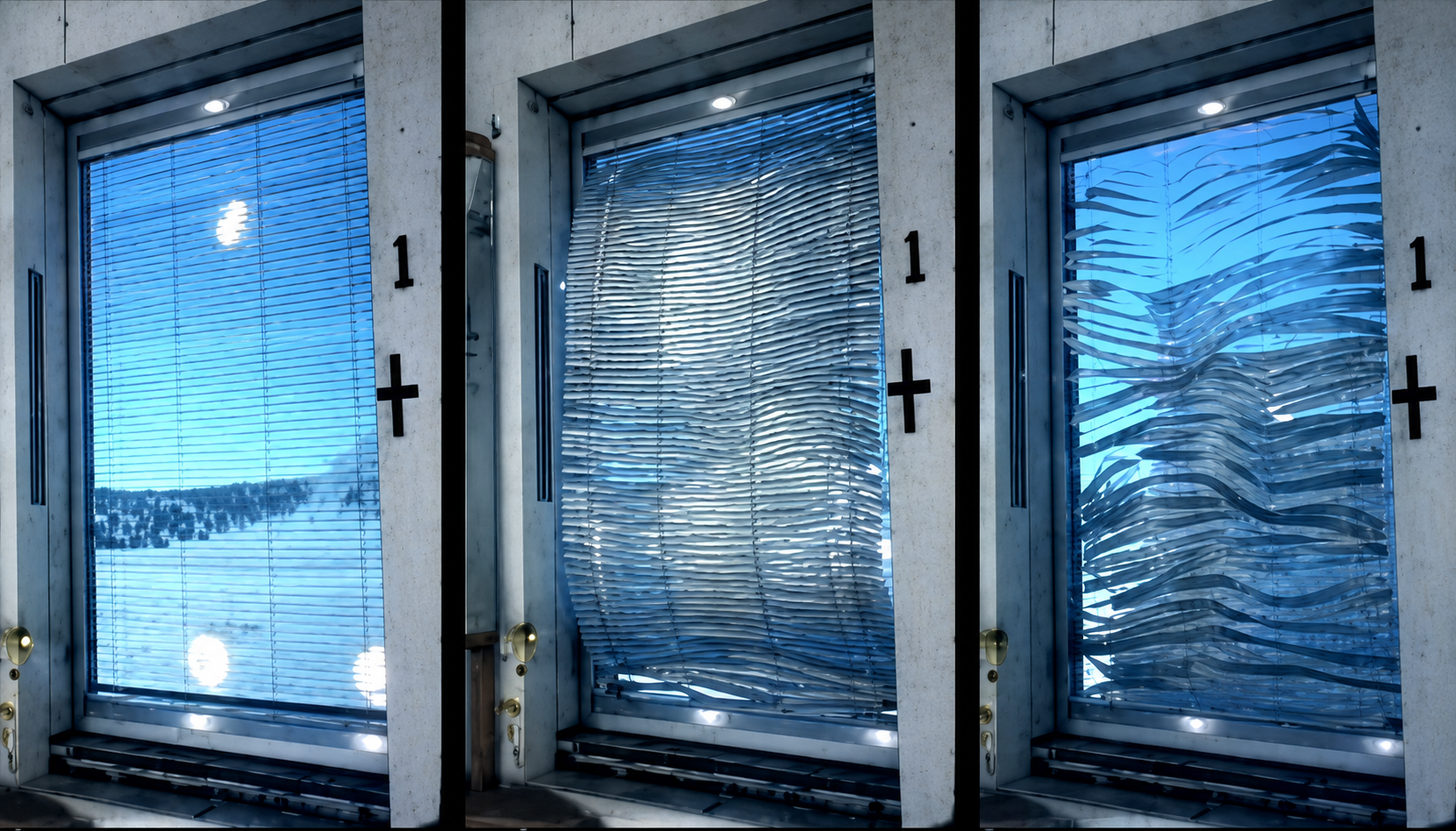
During this live explosive event, the blinds successfully prevented the glass-and-film sheet from entering the enclosure and, once the blast pressure dissipated, deflected the debris back outward. The blinds showed no visible damage and were left fully intact after the event—so intact, in fact, that the same units were reused for an additional blast test the following day. In this series of tests, conducted with standard ¼-inch annealed glass and a 7-mil film, the British government's testing agency noted that they had never encountered a blast mitigation product capable of withstanding multiple blasts without degradation. Across all three blasts performed with this same set of blinds, the system sustained no damage and ultimately received a MIN H (Minimal Hazard) rating.
In addition to their proven blast performance, BlastBlinds offer several practical advantages for real-world installation. Their low-profile design occupies no more space than a conventional window blind, making the system suitable for both modern and historically significant buildings where preserving existing sight lines is essential. The energy-absorbing design allows the use of smaller anchorage hardware, and during testing all anchors—standard ¼-inch bolts—remained secure without failure or deflection. BlastBlind also provides a cost-effective solution, with installed pricing typically ranging from $40 to $50 per square foot. Notably, the system performs effectively whether the blinds are in the open or closed position; all blinds used in the blast tests were fully open and still captured debris that would otherwise have entered the occupied space during an explosive event.
INTERESTED?
Learn how BlastBlinds can help protect your facility. Request a consultation today.
CONTACT